Most people think of Maui as a winter destination. Whale season, holiday escapes, the mad rush of December and January. And while those months are spectacular, they come with a price: packed beaches, sold-out restaurants, resort rates that climb to eye-watering heights.
Summer tells a different story.
From June through August, Maui settles into a rhythm that long-time visitors quietly guard. The water warms to its clearest and calmest. The trades blow steady and cool. The cultural calendar fills with festivals that feel genuinely local rather than tourist-facing. And the families and groups who choose this season — those who show up with a little insider knowledge — tend to have the best trips of their lives.
Here's what they know.
The Water Is at Its Best
Let's start with the obvious reason most people come to Maui: the ocean.
Summer brings the calmest sea conditions of the year on Maui's south and west shores. Kaanapali, Wailea, Napili — the water turns a shade of turquoise that photographs can't quite capture, and visibility for snorkeling drops to 60, 80, sometimes 100 feet. The humpback whales that dominated the winter channel have moved on, and in their wake the ocean feels spacious, serene, and entirely yours.
Snorkeling is exceptional. Black Rock at the north end of Kaanapali Beach is one of the best shore-entry snorkel spots in Hawaii — no boat required, no reservation, just a mask and fins and an underwater world of sea turtles, reef fish, and coral. Molokini Crater, a partially submerged volcanic caldera just offshore, offers guided snorkel and dive tours year-round but is particularly rewarding in summer's calm conditions.
Swimming and paddleboarding are ideal. The gentle summer swells make Kaanapali and Wailea perfect for stand-up paddleboarding, kayaking, and just floating in warm, clear water. If you've been wanting to try outrigger canoe paddling or an introductory surf lesson, summer is the season to do it.
A Cultural Calendar Worth Planning Around
Maui's summer events are rooted in real Hawaiian culture, which makes them worth planning your trip around, not just stumbling into.
Kamehameha Day — June 20. One of Hawaii's most significant holidays honors King Kamehameha I, the monarch who united the Hawaiian Islands. On Maui, the celebration centers on the Nā Kamehameha Commemorative Pāʻū Parade — a stunning procession of riders draped in fresh flowers representing each Hawaiian island, moving through the streets to the sounds of traditional music. It's genuinely moving to witness, and a reminder that Maui's history runs far deeper than its resort corridors.
Kapalua Wine & Food Festival — June 25–28. Now in its 45th year, the Kapalua Wine & Food Festival is one of the premier culinary events in the Pacific. Set at the Ritz-Carlton Kapalua — just up the coast from Kaanapali — it draws James Beard-recognized chefs, world-class sommeliers, and food lovers from across the country for a long weekend of tastings, seminars, and the iconic Grand Tasting Gala on the cliffs above the ocean. If you're a food and wine traveler, build your June trip around this.
Obon Season — June through August. Obon is a Japanese Buddhist tradition honoring ancestors, brought to Hawaii by early plantation workers and now woven into the island's multicultural identity. On summer evenings, Buddhist temples across Maui host Obon Festivals — lantern lighting, Bon Odori dancing in colorful yukata, food booths serving local favorites. These are community events open to visitors and among the most authentic evenings you'll spend on the island. The Lahaina Jodo Mission hosts its celebration in August.
Fourth of July — Kaanapali Beach. Both the Kaanapali and Wailea resort areas put on fireworks displays over the water on the Fourth of July. Watching fireworks burst over the Pacific from a private lanai — or from the sand at Kaanapali Beach — is an experience that's hard to top. See the full Maui July 4th fireworks guide →
Masters of Hawaiian Music Series. Throughout the summer, intimate slack-key guitar and ukulele performances are held in beachfront settings around the island. Kī hoʻalu — slack-key guitar — is Hawaii's signature musical tradition, and these concerts are a world away from the resort lobby music you might expect.
Kaanapali Beach: Hawaii's Best Beach for Families and Groups
If you haven't spent time on Kaanapali Beach, this is what you need to know: it consistently ranks among the best beaches in the United States, and for good reason.
Four miles of white sand on Maui's northwest shore, framed by the West Maui Mountains on one side and the Pacific on the other. The beach is accessible its entire length, with calm swimming conditions in summer, excellent snorkeling at Black Rock, a coastal walking path connecting the resorts, and a lively but never overwhelming atmosphere that works equally well for families with young children, couples, and friend groups.
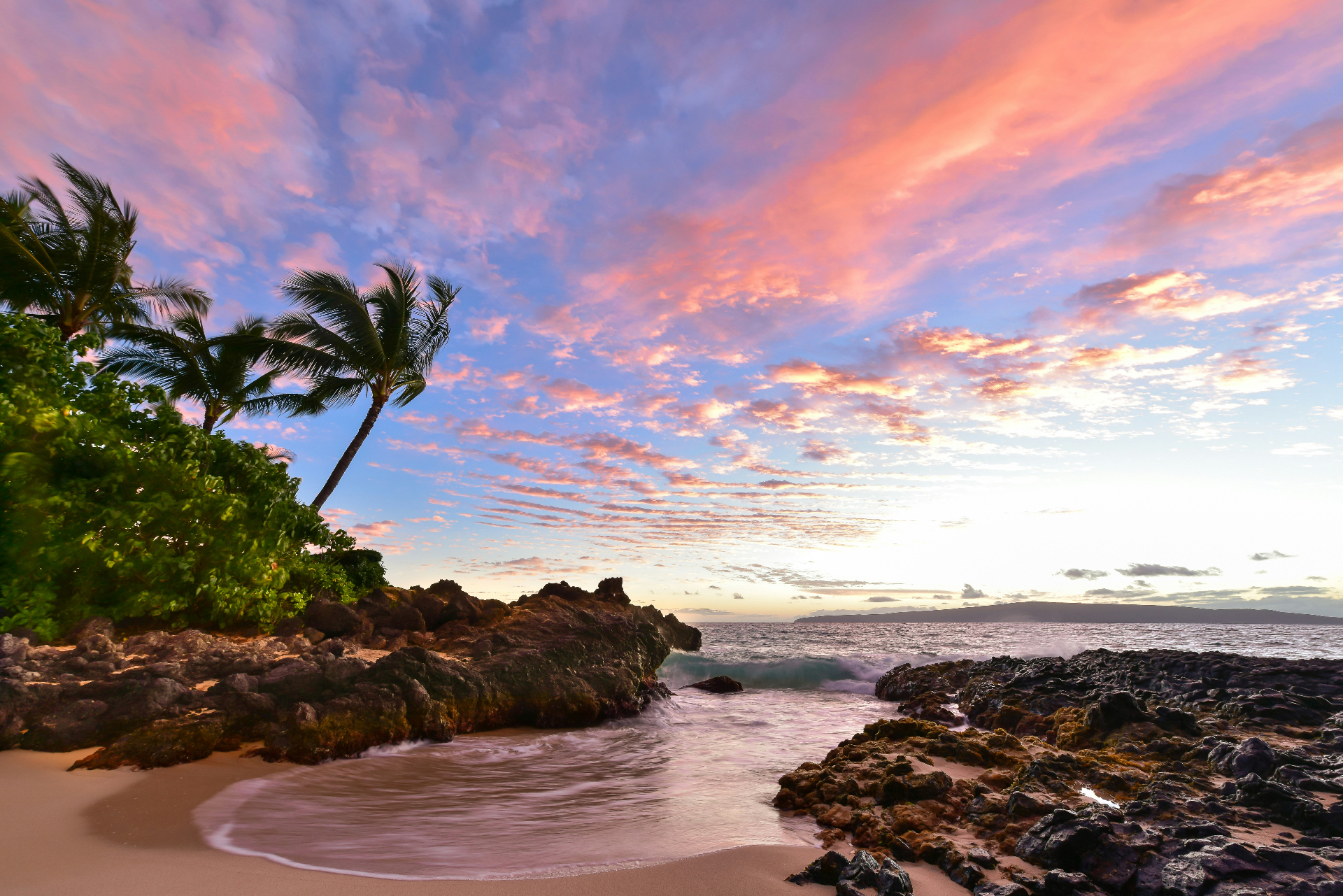
Sunset from Kaanapali is something you don't forget. The sun drops toward Lanaʻi and Molokaʻi on the horizon, turning the water every shade of orange and pink before the stars come out over the channel.
The major resorts — Hyatt Regency, Sheraton, Westin, Royal Lahaina — line the beach and are fully operational, which means their restaurants, activities desks, and beach equipment rentals are all available to you. But staying in a private villa nearby gives you the rare combination of resort-level amenities all around you and the privacy and space of a home when you return.
Getting Out on the Water
Summer is the season for Maui's water activities, and the options are extensive.
- Whale watching (early season) — Humpbacks are typically present through May, and some linger into June.
- Sunset sails — Kaanapali and Lahaina Harbor both offer evening catamaran cruises with dinner and cocktails over calm summer water.
- Sport fishing — Productive waters off West Maui for mahi-mahi, ono, and ahi through the summer. Half- and full-day charters depart from Lahaina Harbor.
- Kayaking to sea turtles — Honu encounters along the Kaanapali coastline are almost a sure thing in summer's warm, clear water.
Exploring Beyond the Beach
Maui rewards curiosity. If you're willing to drive past the resort corridor, the island opens up.
Haleakalā National Park — The drive to the summit of Haleakalā volcano (10,023 feet) is one of the most dramatic road trips in America. Above the clouds, the crater landscape feels otherworldly. Sunrise at the summit requires an advance reservation and a 3am alarm — but it's one of those experiences people come back from different.
The Road to Hāna — Hawaii's most famous drive winds along Maui's northeastern coastline through 59 bridges, bamboo forests, waterfall pools, and black sand beaches. Go on a weekday, start early, and pack a lunch. The road itself is the destination.
Upcountry Maui — The slopes of Haleakalā above Kula are a different world: cool, green, fragrant with eucalyptus and lavender. Stop at Ali'i Kula Lavender Farm, grab coffee at a local Upcountry café, and visit the paniolo (cowboy) town of Makawao — especially in late June for the annual rodeo and parade.
Old Lahaina Town — Lahaina is in active recovery following the August 2023 wildfire, and the community has asked that visitors approach with respect rather than curiosity. That said, Lahaina Harbor has partially reopened, some beloved restaurants are back, and the Old Lahaina Luau — a genuinely excellent cultural experience — runs nightly. Visiting with intention and spending money locally is one of the most meaningful things a traveler can do right now.
The Case for a Private Villa Over a Resort
Maui's major resorts are excellent. But they come with trade-offs: shared pools, fixed check-in lines, identical rooms, and rates that reflect all of the above.
A private villa changes the equation entirely. You get a kitchen, which means fresh fruit and coffee on your own schedule, not an $18 omelet in a crowded hotel restaurant. You get a private pool, which means the kids (or the adults) can swim at 10pm without rules or other guests. You get a living room, a lanai, an outdoor dining table — space to actually live in rather than a room you're just sleeping in.
Our Lahaina villa sits near Kaanapali Beach with direct ocean access and uninterrupted Pacific views from every room. Three en-suite bedrooms, an infinity pool that dissolves into the horizon, a chef's kitchen, and a covered lanai with a built-in BBQ and dining for the whole group. The master suite has a private balcony — your personal sunrise and sunset viewing platform above the ocean.
It's the kind of property that turns a good vacation into the one you talk about for years.
Browse availability and book direct at telluridetravelrentals.com.
Practical Tips for Summer in Maui
- Book accommodation early. Summer fills faster than most visitors expect, especially July.
- Airfare is higher this year. Flights to Maui are more expensive in summer 2026 — book as far ahead as possible and consider mid-week departures.
- Rent a car. Maui doesn't have meaningful public transportation. Book before you arrive — availability gets tight in peak weeks.
- Respect the ocean. Check conditions before entering, swim near lifeguarded beaches when in doubt, and always wear reef-safe sunscreen.
- Eat local. Seek out the poke counters, plate lunch spots, and shave ice stands that locals actually go to.
- Book the Luau in advance. The Old Lahaina Luau in particular sells out weeks ahead.
Maui in summer is unhurried, warm, culturally rich, and quietly extraordinary. The travelers who know this come back year after year, and they're not always eager to share the secret. ;)
Now you know.